
Neck Templates


Neck Templates
Below are the templates that are available for purchase: All Templates are Only $21.95 USD, and FREE shipping anywhere in the world! Buy 5, get 1 free(to receive this discount you must Contact me to receive an invoice via Paypal).
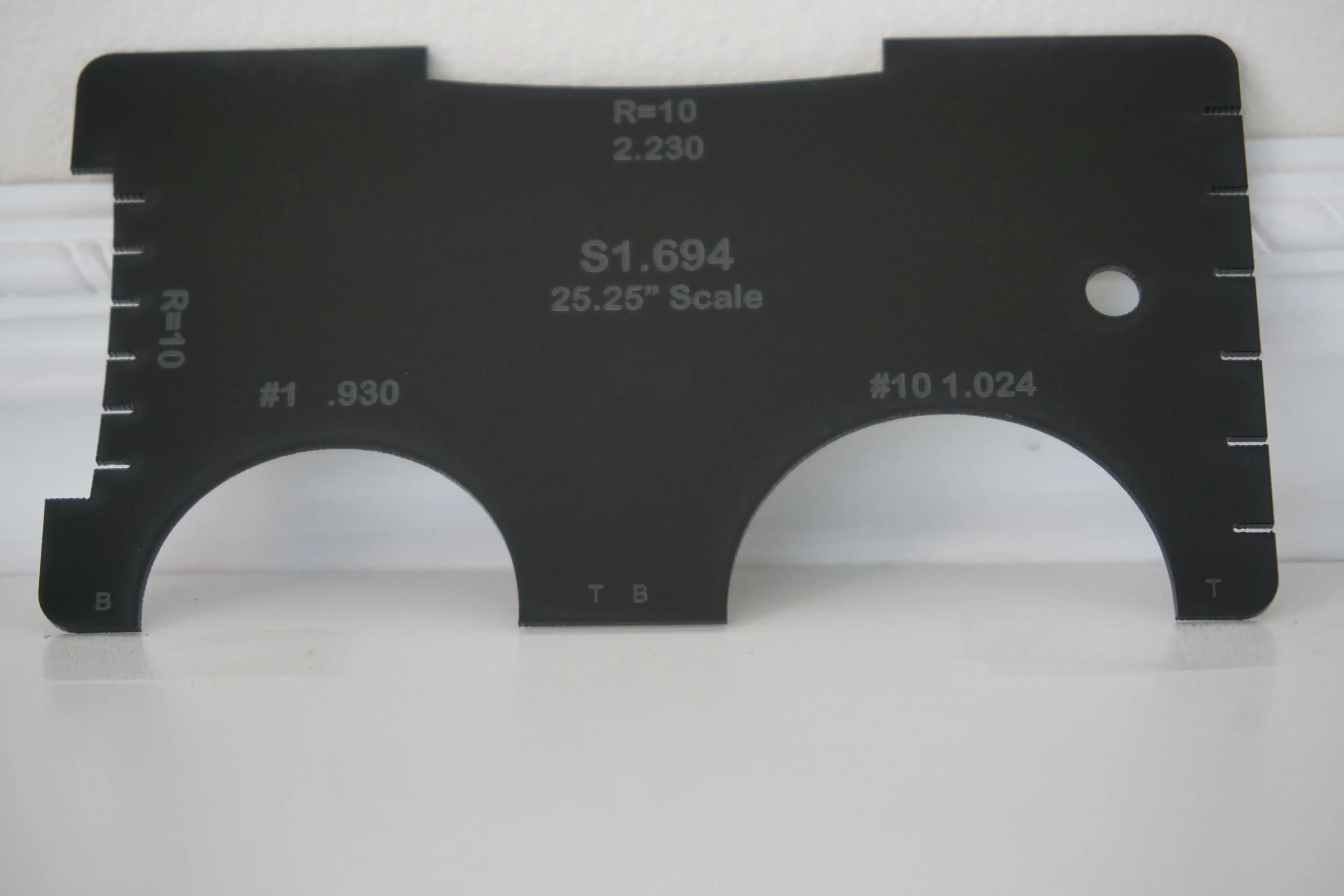
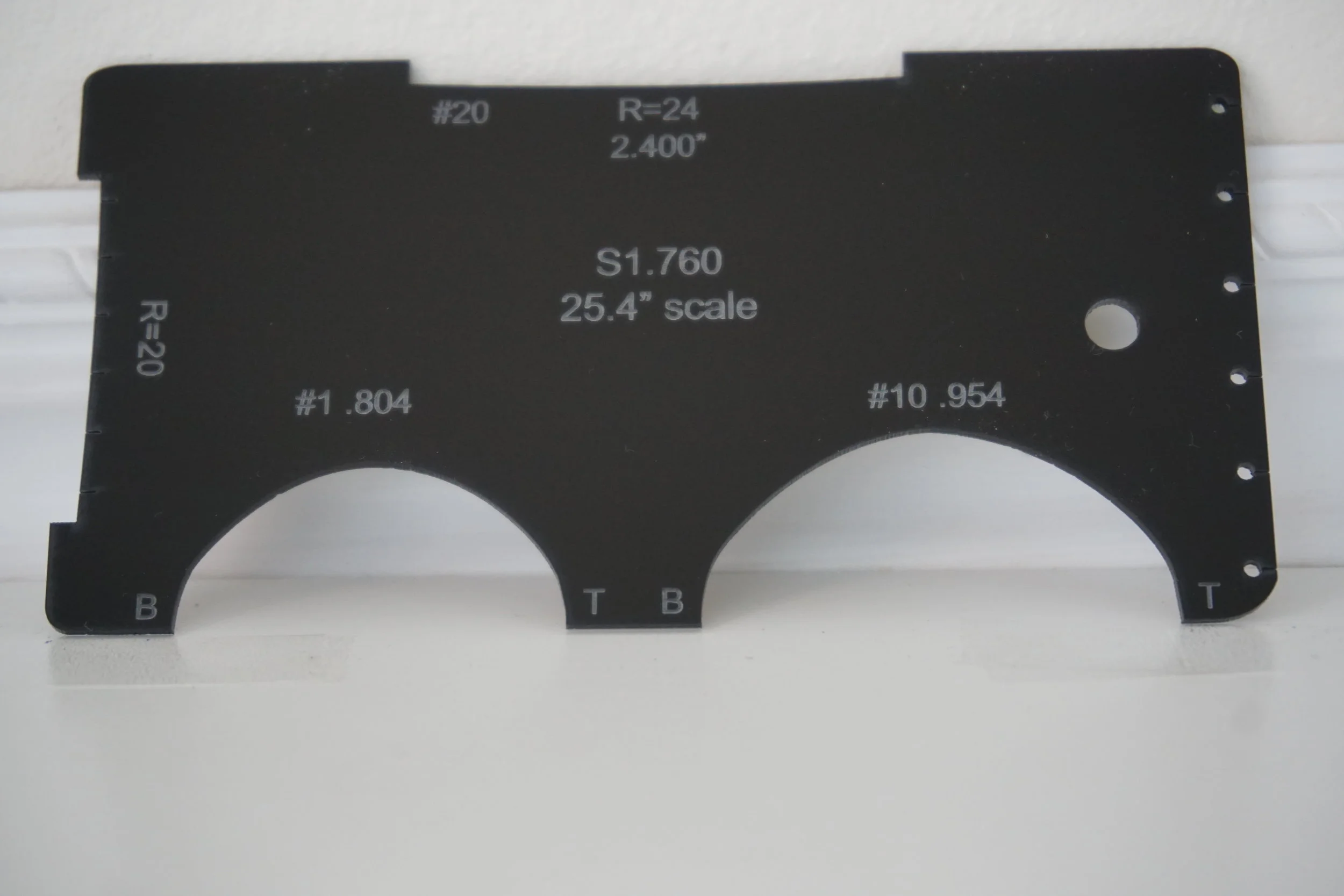
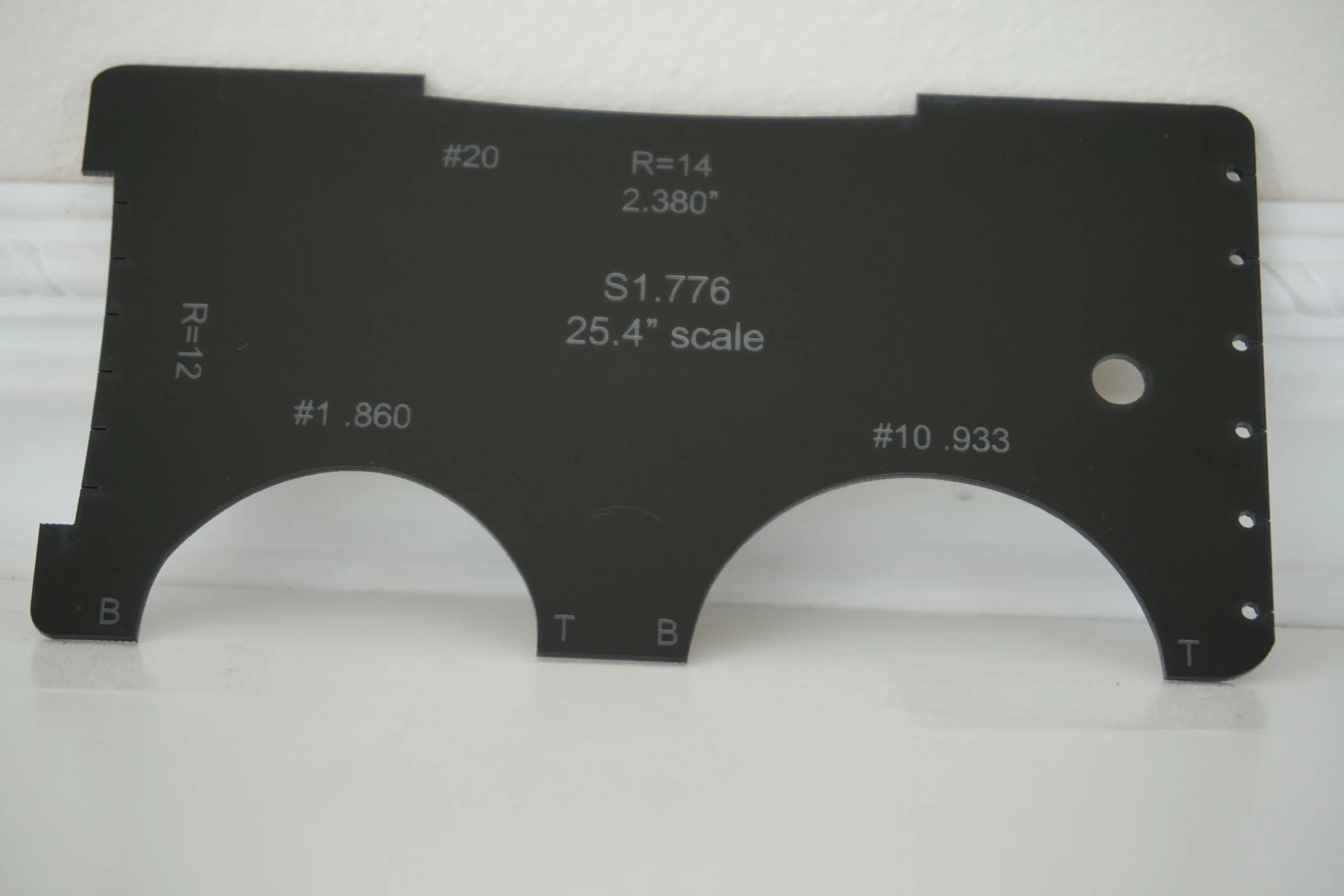
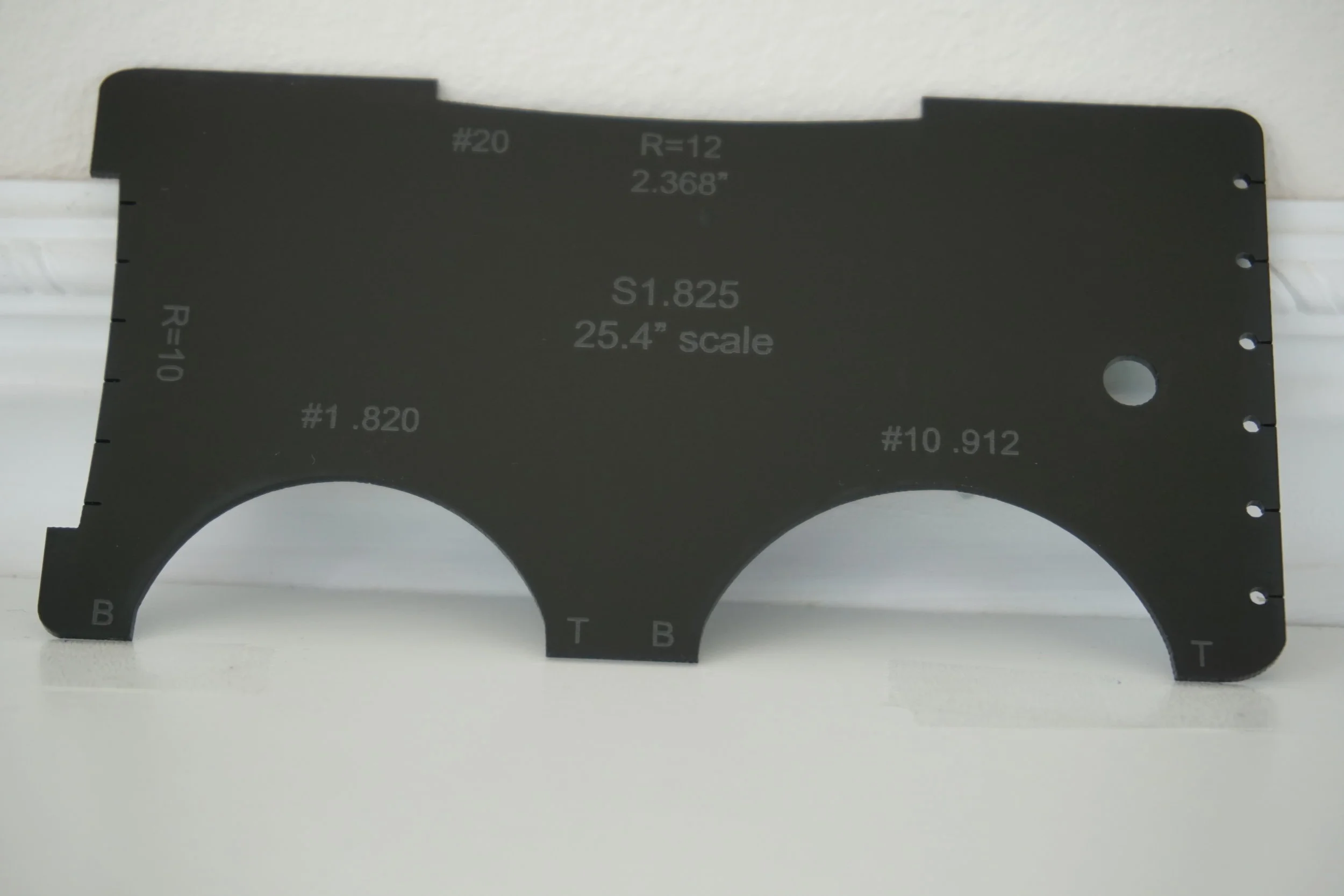
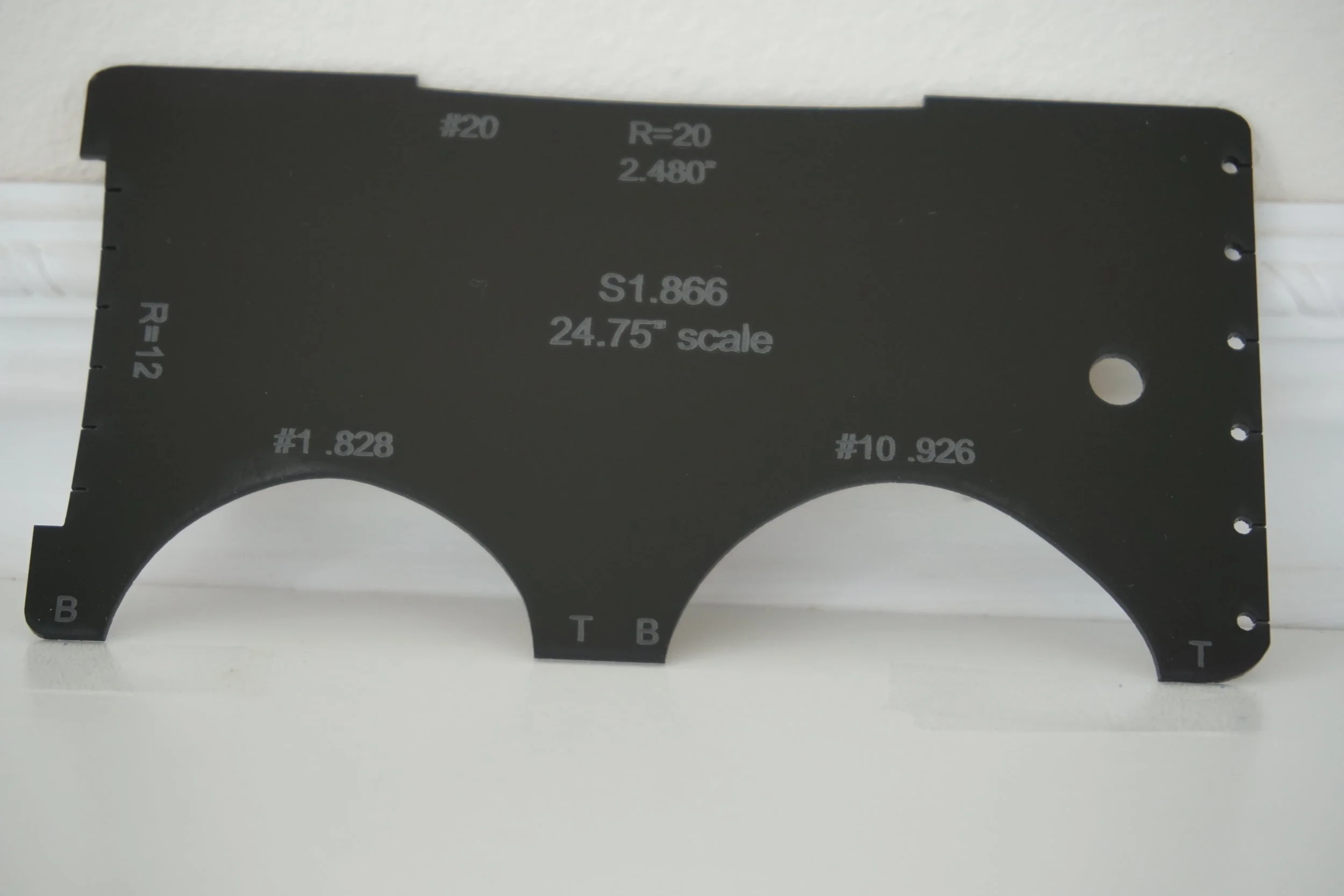
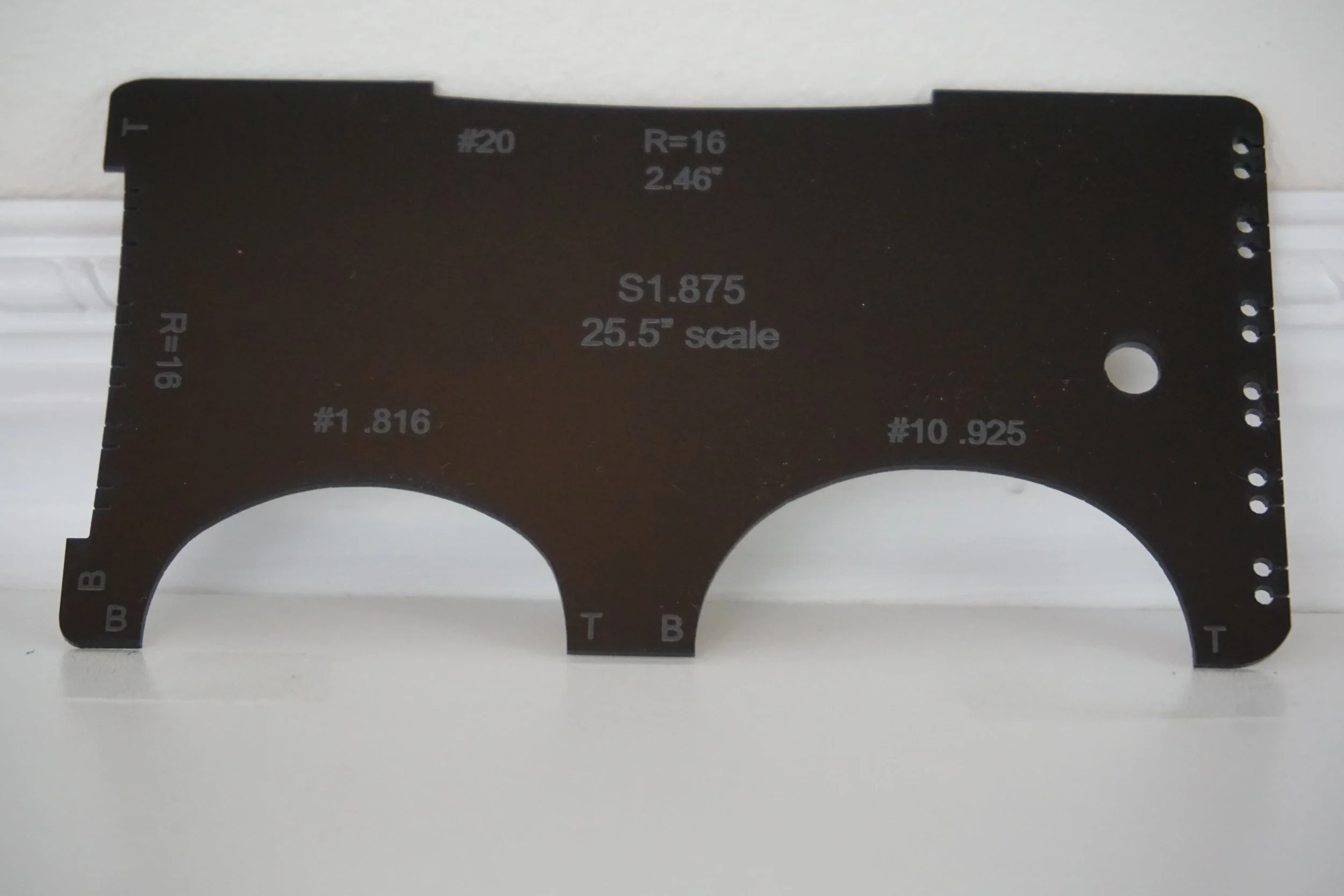
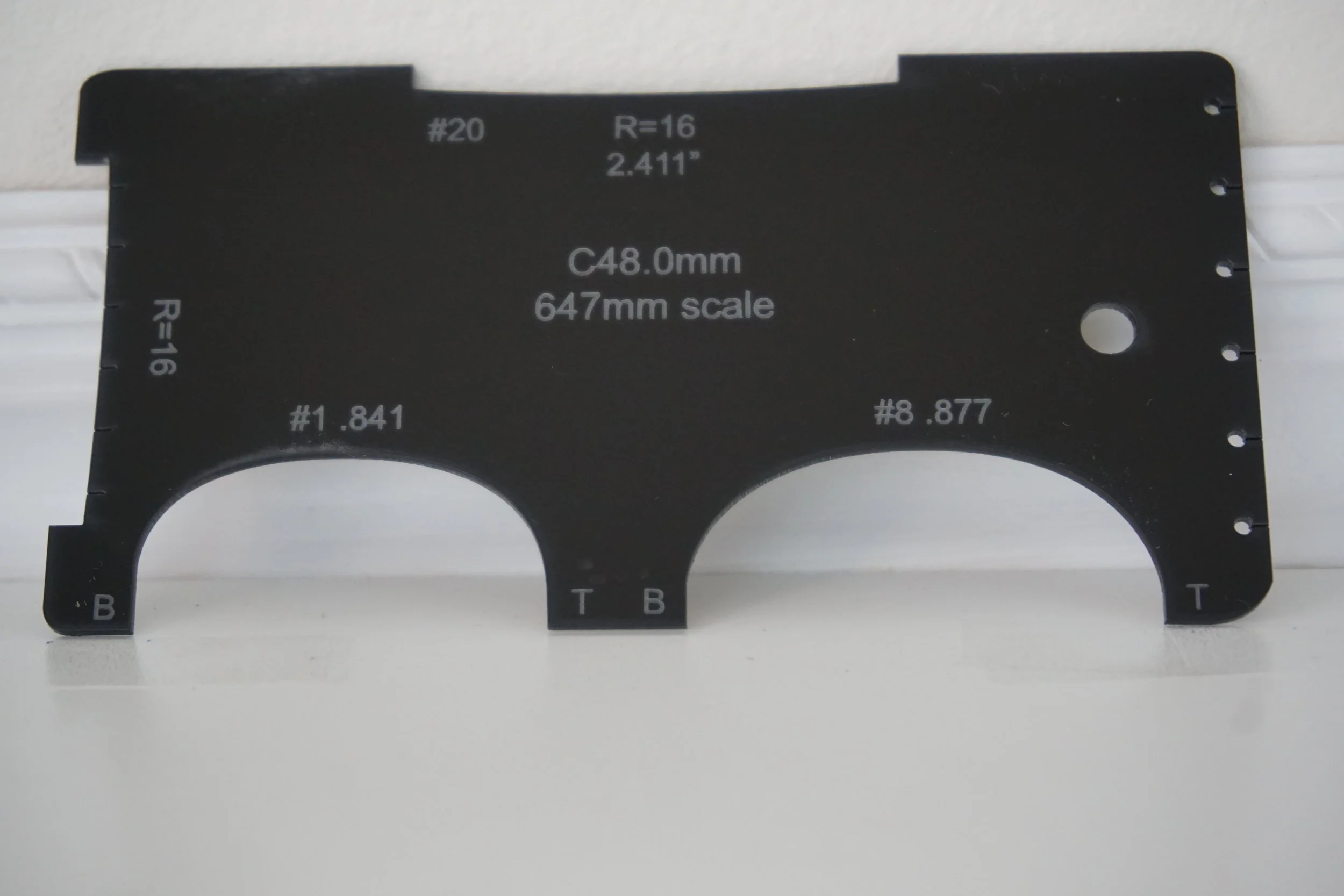
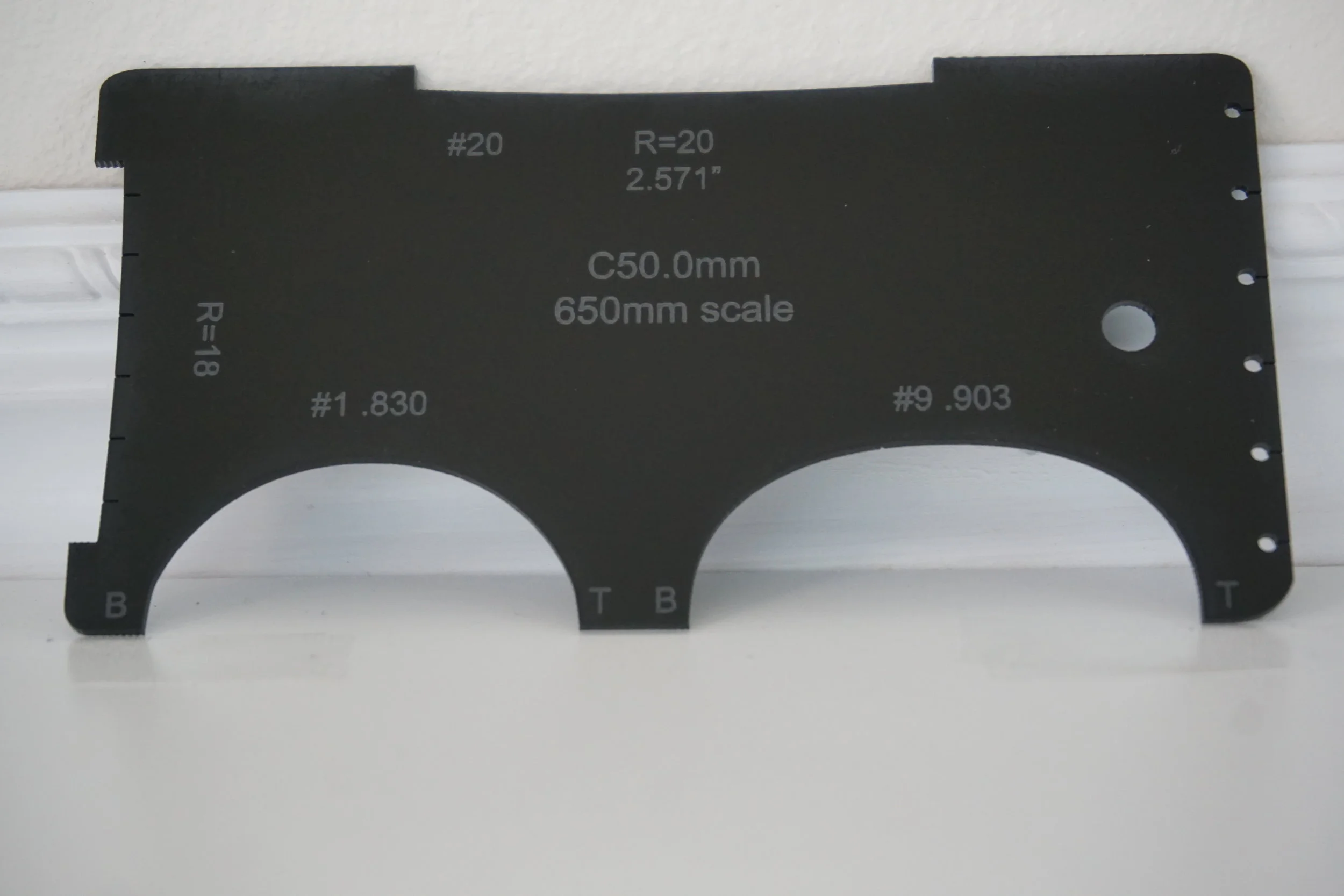
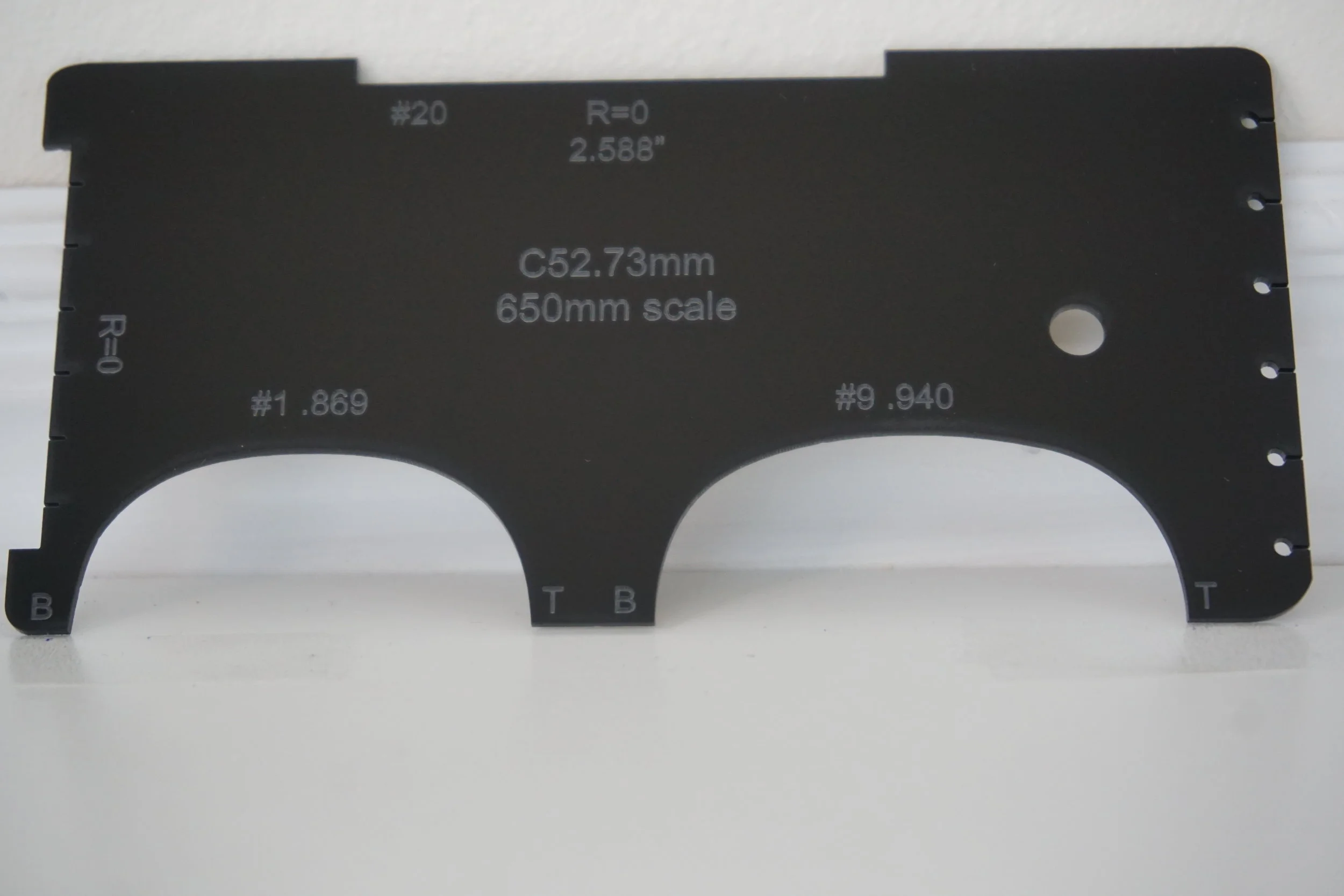
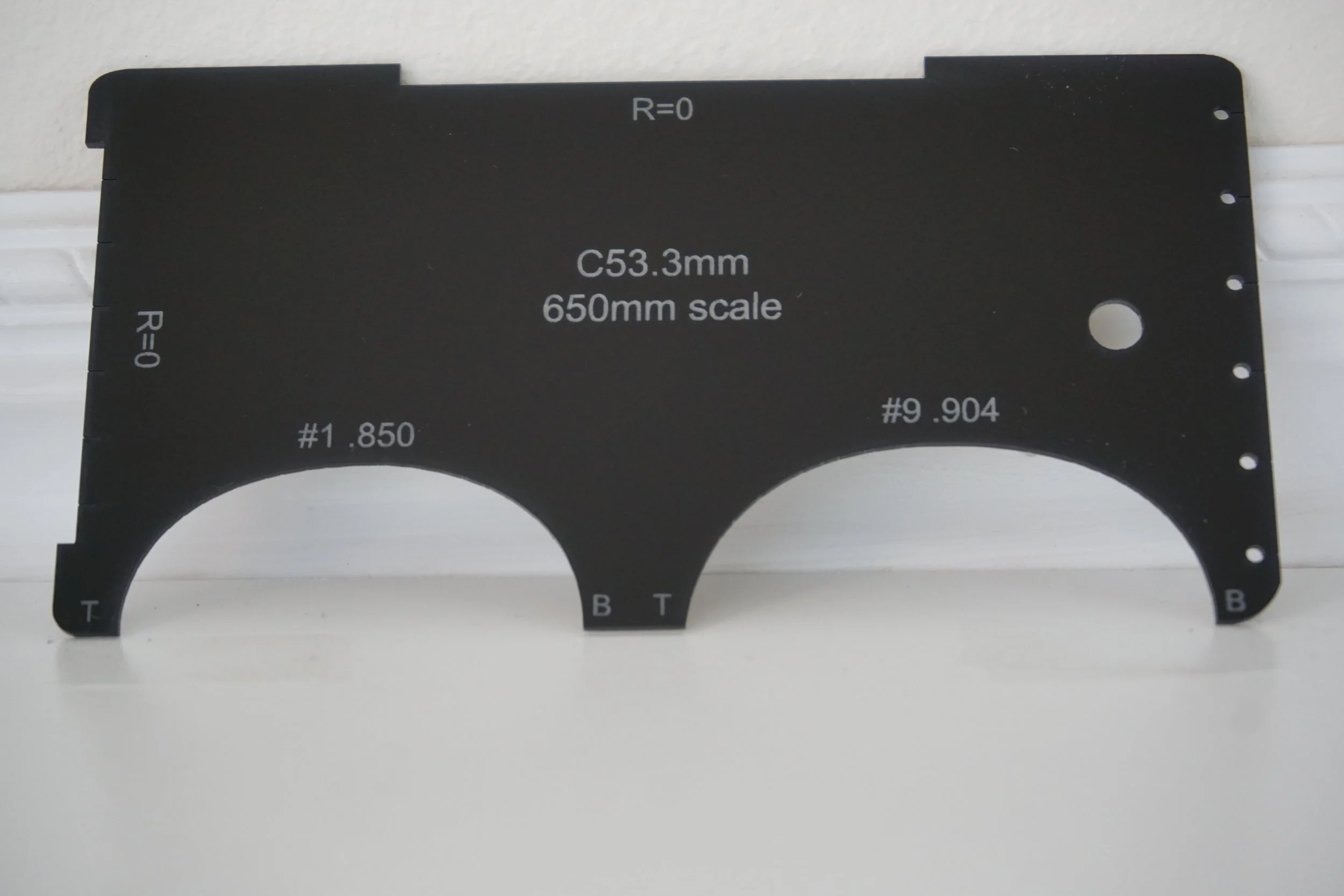
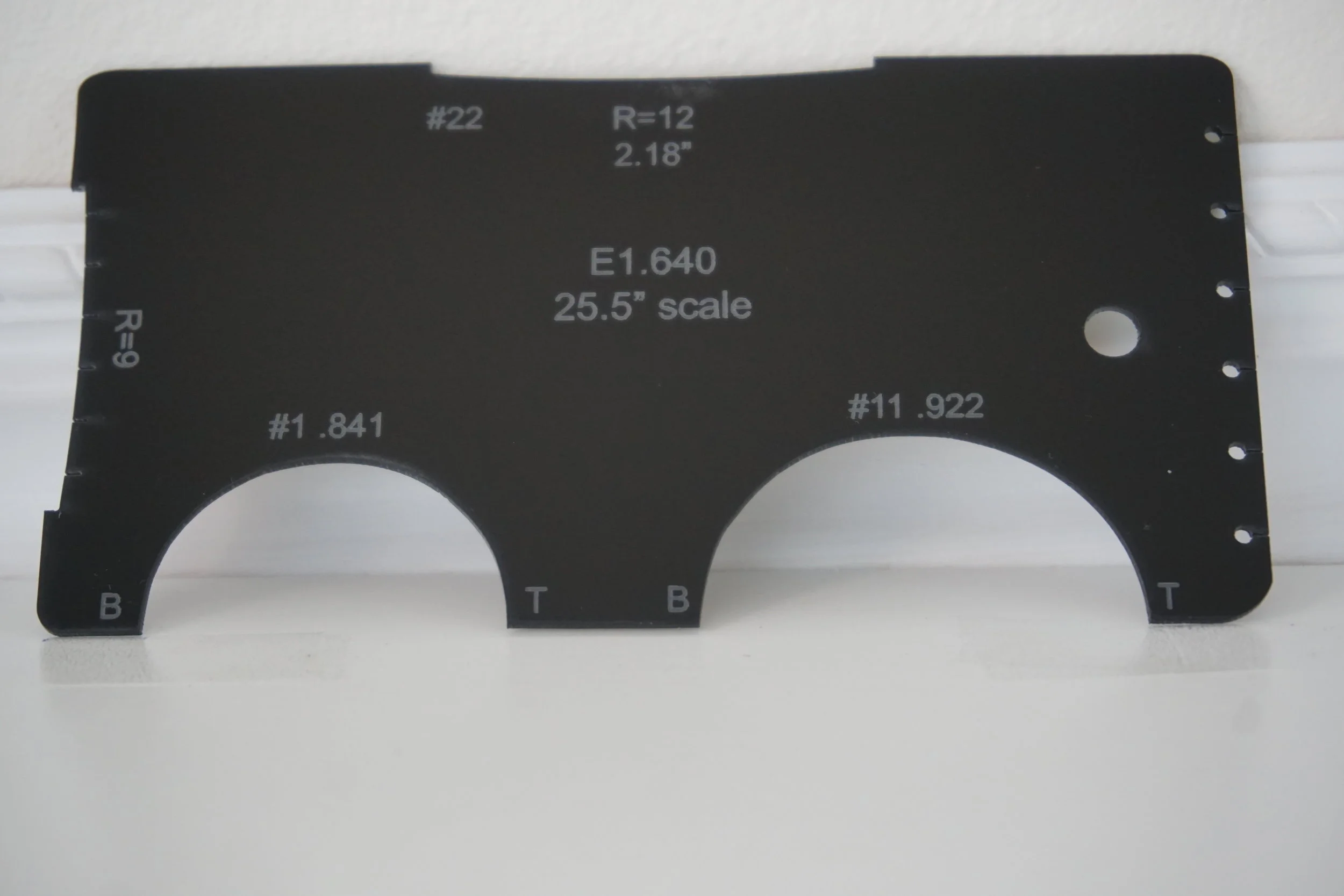
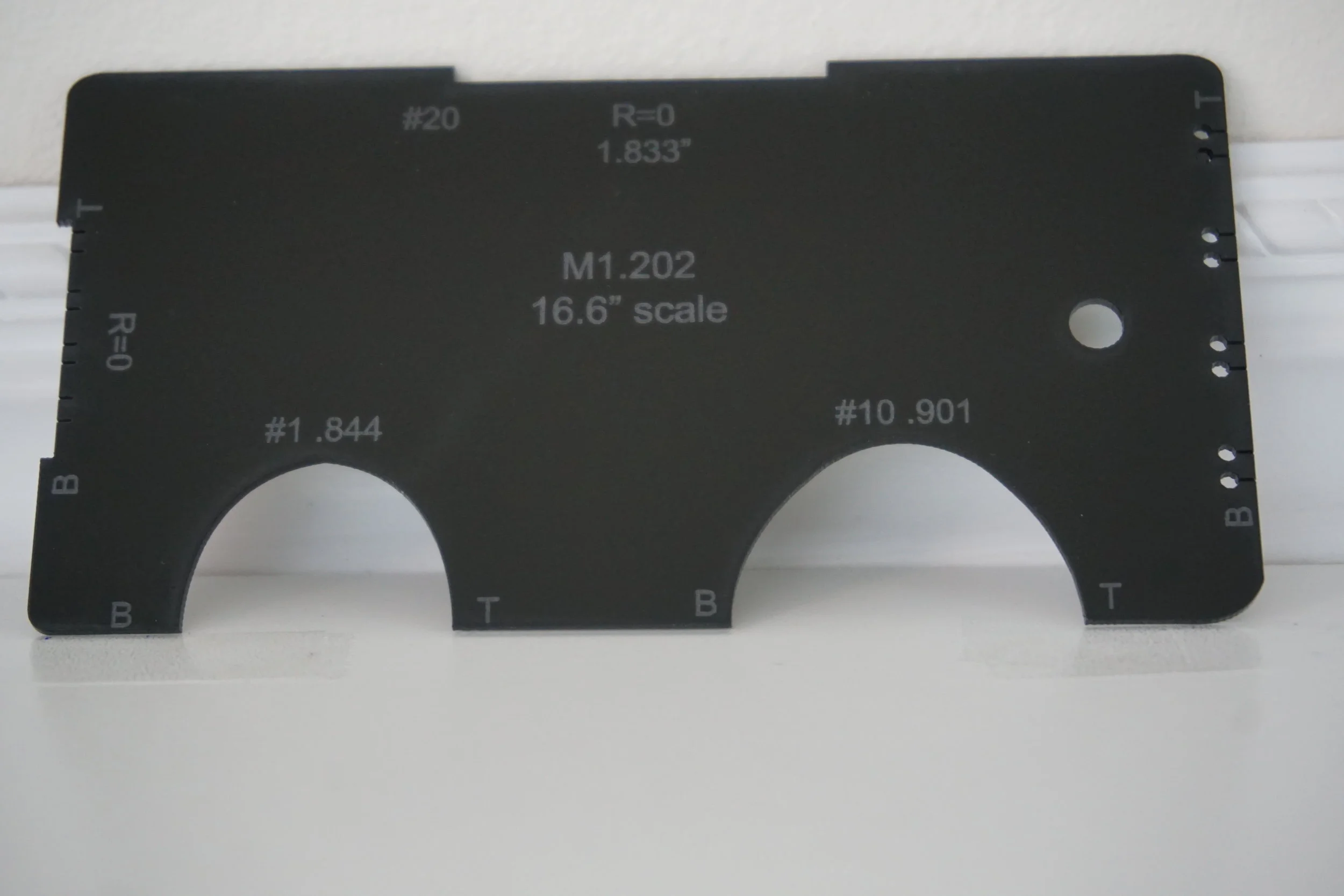
This jig is an innovation jig from Luthier Suppliers!! These templates include all the information needed to duplicate a neck. In association with Edward Victor Dick of Victor Guitar , and Director of The Colorado School of Lutherie, Luthier Suppliers now offers a first time builder, or an experienced builder the chance to replicate a part of history. Edward discovered early on in his 30 year career as a custom builder that the most reliable way to ensure that his clients would like the feel of a new instrument was to precisely copy an existing neck that the player preferred. He thus began creating an archive of neck measurements and contours. The EVD Neck Contour Templates are the result of this research. Each template precisely documents 11 essential elements of an existing stringed instrument neck
Most templates are 5 3/4" width x 3" height x 1/16" thick. All templates are cut on a laser machine and are cut within 20 thousands of an inch of tolerance. Actual dimensions of each template may vary due to the width of the neck or number of strings.
Legend: From left to right: R=12 - Radius of the fingerboard at the nut in inches, R=14 - Radius of the fretboard at the last fret in inches, 2.25 - The width of the fretboard at the last fret in inches, S1.776 - The model number and also the width of the fretboard at the nut in inches, 25.4" Scale - is the scale of the guitar from nut to saddle without compensation, #10 .933 - The thickness at the 10th fret in inches, T & B - is a reference to the treble and bass side of the neck, #1 .860 - The thickness of the neck at the first fret in inches(this includes a 1/4” thick fretboard)
It is important to note that each of these templates document an actual neck. And so, due to the inconsistencies of manufacture, they may not exactly match other instruments of that maker. The maker and year of the instrument can be found in the following table. Some necks are asymmetrical, whether by intention or by accident, and these asymmetries are indicated with B for bass side and T for treble side. In the case of mandolins or 12 string guitars string spacing are almost always asymmetrical at the nut and sometimes at the bridge and so the bass and treble sides are similarly indicated. Note that not only can these templates be used to recreate necks, but individual elements can be combined to create new and original neck shapes. They can also be utilized to recreate a single element for a specific instrument (for example, make a new nut or bridge for an old Gibson mandolin).
* Cutouts for the nut and last fret are made very slightly oversize so as to more easily position the template to check fingerboard radius and string spacing. For actual size see numbers . You can either center the string spacing at the nut or, if you prefer, sneak it over to one side or the other as is sometimes done. The most important measurement here is the width of the first to last string.
** Also note that string spacings for guitars are marked mathematically perfect center to center even if existing instruments were slightly off. This was the system most commonly used on older instruments. If you prefer to use the more modern system taking into account string diameters you may want to use something like the Stewart MacDonald string spacing rule (part #0673). String spacings for mandolins and 12 string guitars were taken directly off existing instruments and as such often do take into account string diameter. They may or may not be mathematically perfect.
To see a list of all neck templates available for sale:


















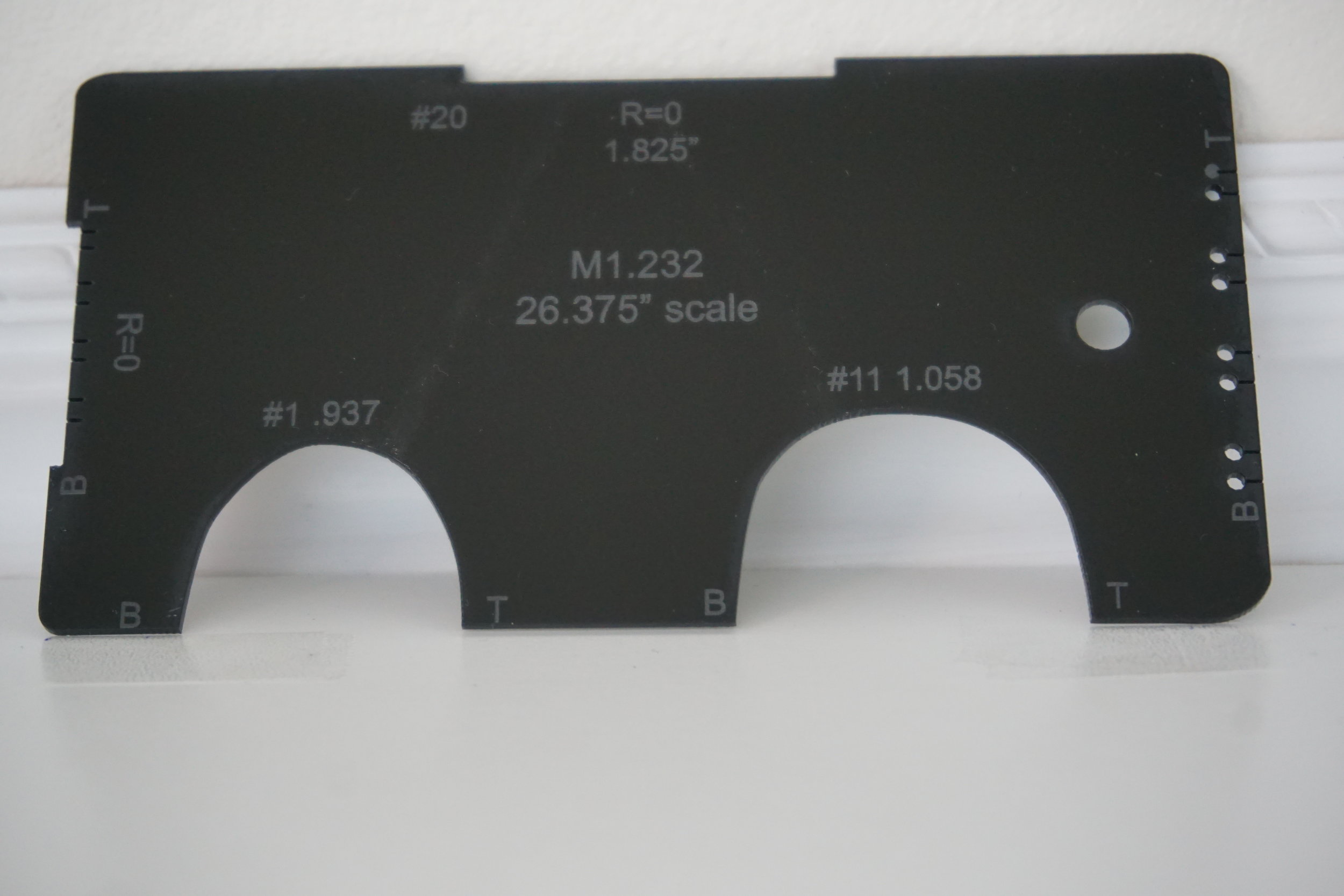


Similar to, but slightly bigger than most tenor banjo necks